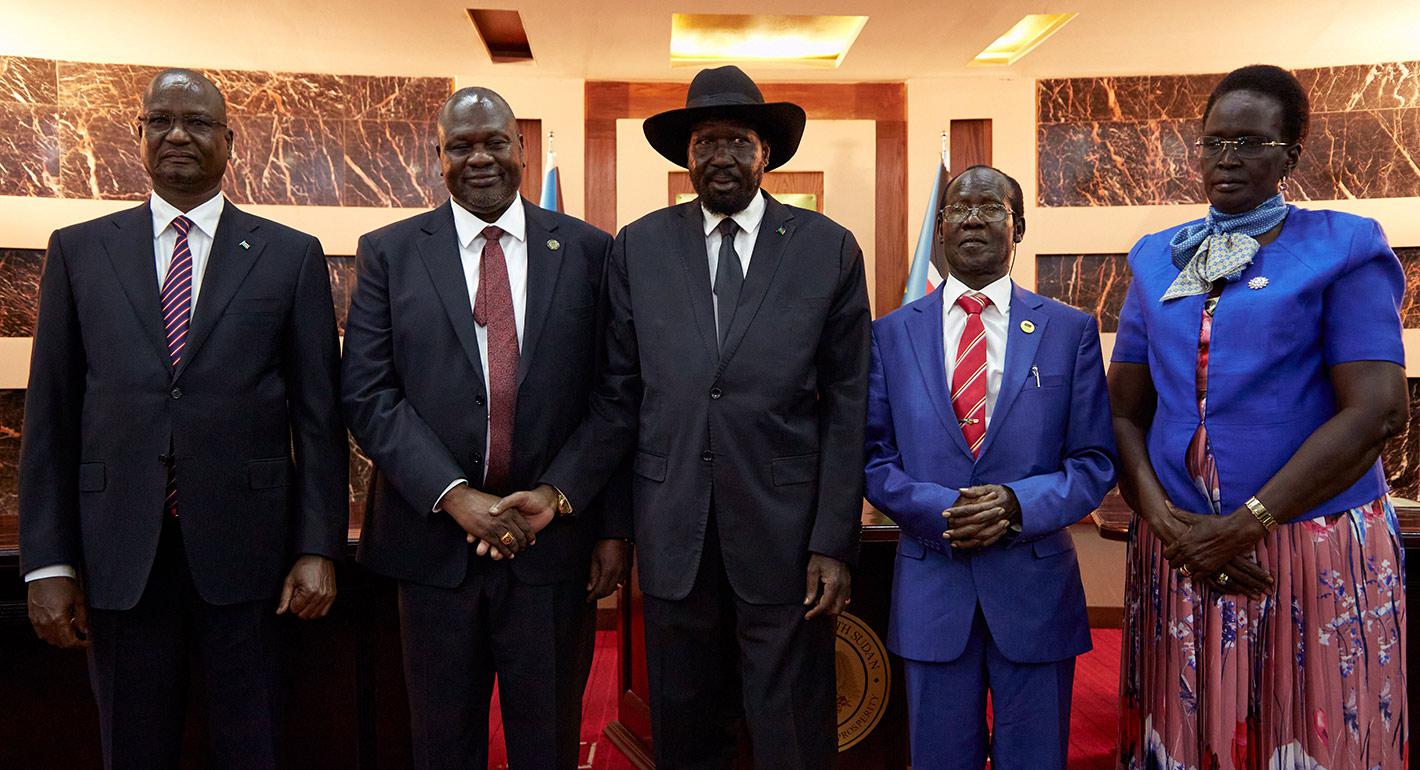
He flagged off “South Sudan Green and Industrial Revolution 2030, In Republic of India” with the association of Prof. Ripu Ranjan Sinha Chairman and President Council for sustainable peace and development the conceptual framework is clearly articulated across multiple national strategies for republic of South Sudan.
The South Sudan Development Plan (SSDP) 2026-2036, is described as a strategic framework to build a “prosperous, productive, and innovative society” and a benchmark for tracking progress. The nation’s SDG Rescue Plan further operationalizes this vision, committing to specific targets that directly correspond with the foundation’s mandate.
These include targets for sustainable food production and resilient agricultural practices (Target 2.4), achieving full employment and decent work for youth and women (Target 8.5), and promoting inclusive and sustainable industrialization (Target 9.2).
The “Green and Industrial Revolution” framework is a two-pronged approach. The “Green” component emphasizes environmental resilience, sustainable agriculture, and economic diversification beyond oil.
The “Industrial” component focuses on value addition, skills development, and industrialization. The foundation’s multi-thematic mandate allows it to effectively bridge these two pillars.
by supporting the development of specific agricultural value chains—such as groundnuts, honey, and horticulture, as prioritized by the EU-funded GRACE project—the foundation can strengthen rural livelihoods (the “Green” aspect) while simultaneously providing vocational training in food processing and agribusiness to create new jobs (the “Industrial” aspect).
The foundation can position itself as a critical, on-the-ground implementation partner for the government’s high-level development goals, providing a model for what the national vision can look like in practice. Given the founder’s own public statements on the need to diversify the economy through farming, this alignment is both strategic and authentic.


